Hantavirus: health scare, media loop and Covid memory — why people no longer react the way they used to
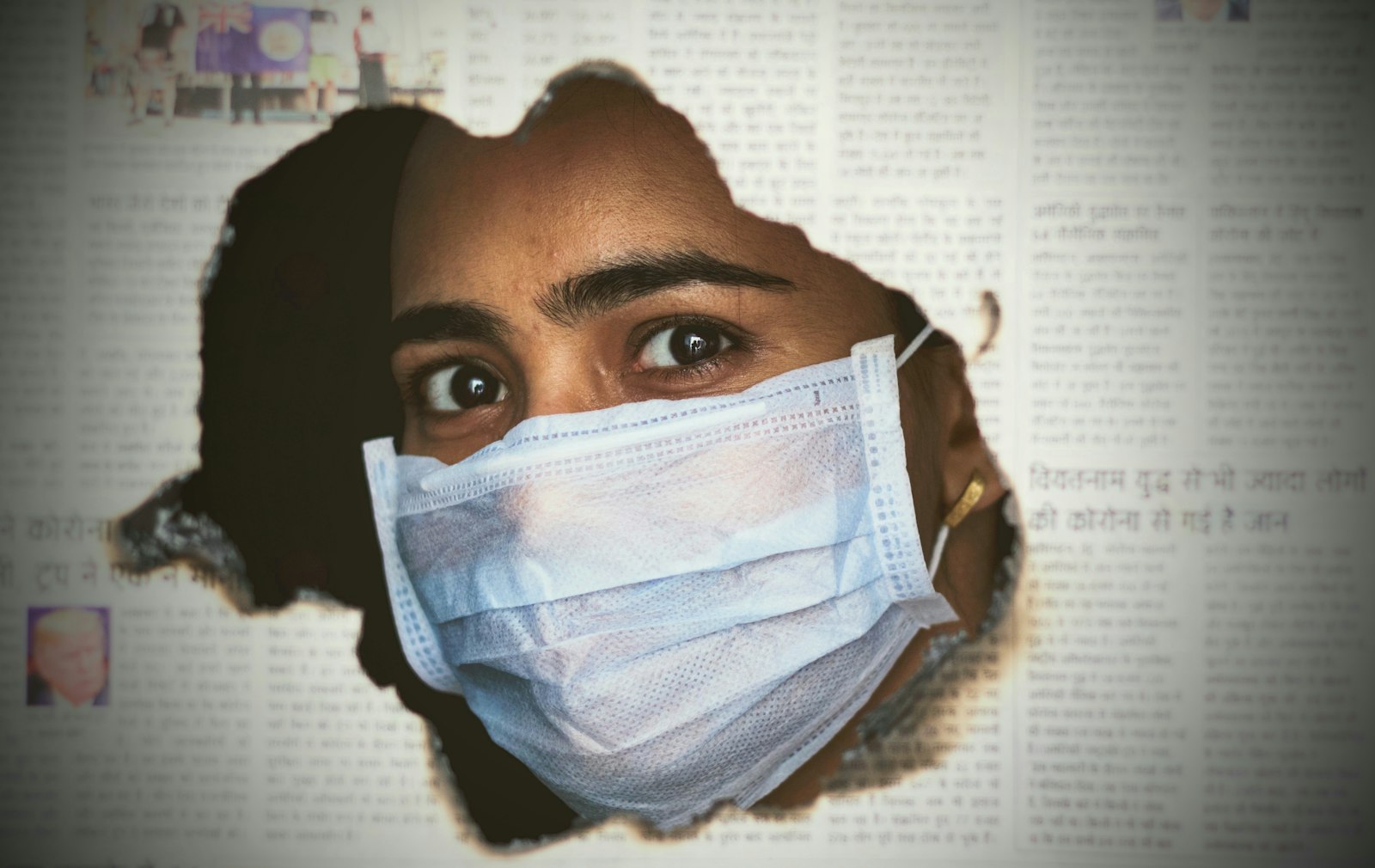
Hantavirus: is a new health psychosis on the way?
For several days now, the word “hantavirus” has been flooding social media, news channels and Facebook posts. Suspected cases, cruises, quarantines, mask stockpiles, TV experts, polls on bringing back masks, vaccine projects, international health surveillance…
For many people, a strange feeling is surfacing. Like déjà vu.
The images immediately recall the Covid era:
- white hazmat suits;
- health alerts;
- fear-inducing headlines;
- omnipresent experts;
- government communications;
- contact tracing;
- PCR tests;
- and debates about future restrictions.
But this time, something has fundamentally changed. Fear no longer works the same way. And that is probably the real story behind all the media frenzy around hantavirus.
What exactly is hantavirus?
Hantavirus is a family of viruses transmitted mainly by certain rodents. Human infection can occur through inhalation of contaminated particles from the urine, saliva or faeces of infected rodents.
Some forms of hantavirus can cause serious respiratory illness, particularly in South America and Asia.
Several important points must be noted:
- hantaviruses have been known for a long time;
- they are not a new phenomenon;
- they remain rare in most European countries;
- human-to-human transmission remains limited according to current scientific knowledge;
- no scenario comparable to the global Covid-19 pandemic has been confirmed.
Yet, despite this relatively contained context, the media frenzy is spectacular. And it is precisely this contrast that is provoking strong reactions among citizens.
Why does “hantavirus” trigger so many reactions on social media?
Because hantavirus touches on more than just health. It reactivates a collective psychological memory that is still extremely raw.
Covid left deep marks:
- fear;
- isolation;
- family tensions;
- loss of trust;
- media contradictions;
- mental fatigue;
- political distrust;
- a sense of manipulation;
- social fractures.
As a result, as soon as certain familiar patterns reappear, a portion of the population immediately enters a state of emotional alert.
And those patterns are everywhere today: health experts on repeat, rolling news channels, alarmist announcements, case counts, government communication, references to strategic stockpiles, vaccine discussions, mask polls, contact tracing, international protocols.
For millions of people, this backdrop looks exactly like 2020.
Are the media manufacturing an atmosphere of anxiety?
This is the question a growing number of people are asking. Because beyond the health reality, another phenomenon is becoming visible: media saturation.
For hours, sometimes entire days, the same images loop on repeat: hospitals, masks, sample tubes, scientists, maps, press conferences, health alerts, alarmist experts, troubling projections.
Even when there are few actual cases, the sheer omnipresence of the coverage is enough to create a crisis atmosphere. And psychologically, the human brain reacts less to the actual number of cases than to the emotional repetition of the news.
This is a well-known mechanism in cognitive psychology: the more visible a threat appears everywhere, the more enormous it seems.
Social media accelerates this effect further. Every post triggers emotional reactions, comments, debates, shares, videos, theories, mockery — and sometimes a genuine spiral of collective fear.
Why many people now respond with humour and mockery
This is probably the most striking shift. Unlike 2020, a huge portion of the population no longer reacts purely with fear. Instead, they respond with:
- sarcasm;
- memes;
- irony;
- mockery;
- detachment;
- and sometimes cold anger directed at the media.
Humorous images about “the hantavirus cruise,” masks and quarantines are circulating widely.
Why? Because humour has become a form of psychological protection. Many people feel they have spent several years under permanent tension. And now, as soon as a new fear-based narrative appears, an instinctive reaction kicks in: “Here we go again — same script, different virus.”
Whether or not one shares that view, it now lives deep in the collective imagination.
Vaccines, restrictions, control: why distrust is surging
The mere word “vaccine” is now enough to provoke extremely strong reactions. Not necessarily because people reject medicine. But because the Covid period profoundly damaged the trust between citizens, governments, laboratories, media, experts and health institutions.
For years, many people felt guilty, censored, divided, excluded from the debate or socially coerced.
The direct consequence: any announcement tied to a future vaccine or a health protocol immediately reactivates enormous emotional tensions — even when no concrete measures have yet been introduced.
The real problem: collective loss of trust
The central issue may no longer even be hantavirus itself. The real issue is the breakdown of trust.
Before 2020, a large part of the population still extended automatic credibility to institutions, media, health authorities and television experts.
Today, every announcement is immediately scrutinised, contested, reframed, compared to Covid and dissected on social media.
Society has become distrustful. And that distrust is completely changing the way health crises are perceived.
Hantavirus: between legitimate information and emotional spiral
Two extremes must be avoided. The first would be to completely deny health risks. The second would be to plunge back into permanent fear fuelled by notifications, rolling news and social media.
The challenge today is to recover discernment. That means:
- verifying information;
- distinguishing facts from speculation;
- avoiding immediate emotional reactions;
- stepping back;
- and refusing the logic of permanent panic.
Because a psychologically exhausted population becomes extremely vulnerable. Chronic fear alters behaviour, the perception of danger, social relationships, trust and even the capacity to think calmly.
Why the “permanent crisis climate” is wearing more and more people down
For years now, people have been living through a continuous succession of tensions: pandemic, war, inflation, energy crisis, digital surveillance, economic instability, social tensions, insecurity, climate anxiety — and now new health alerts.
Many feel a state of mental saturation. And this collective fatigue explains why a growing portion of the population refuses to live in a permanent state of alert.
That refusal is not necessarily recklessness. It is sometimes simply a mechanism of psychological survival.
What “the hantavirus affair” really reveals
At its core, this episode reveals something far deeper than the health question itself. It shows a society fractured between:
- fear and distrust;
- information and perceived propaganda;
- protection and control;
- caution and mental exhaustion.
And above all, it reveals a historic rupture: spontaneous trust in institutions no longer exists.
From now on, every crisis is immediately interpreted through the lens of the collective trauma of Covid. That is probably what explains the explosion of emotional reactions, theories, controversies, memes and anger on social media.
Reclaiming calm, discernment and autonomy
Faced with this anxious climate, many people are now seeking something different. Less fear. Less emotional manipulation. Fewer permanent conflicts.
And more autonomy, local mutual aid, genuine solidarity, perspective, media sobriety and real, everyday life.
Because a society living continually in anguish eventually loses its psychological stability. And when a people no longer trusts the media, institutions or experts, it becomes extremely difficult to maintain collective cohesion.
Hantavirus may be a health issue. But the reaction it provokes reveals, above all, the deep psychological state of our era.
At Mad2Moi, refusing manipulation and permanent fear
Faced with this rising tide of distrust, more and more people are seeking spaces for free discussion, far from media hysteria and permanent confrontation.
This is precisely the spirit that drives the Mad2Moi community. On www.mad2moi.com, people from very different backgrounds come together to exchange, debate, share analysis and preserve their freedom of thought in the face of contemporary media narratives.
Many members believe that certain media and political sequences operate as psychological influence campaigns designed to sustain fear, social division and the gradual acceptance of restrictions on freedoms.
Without claiming to hold an absolute truth, the community above all asserts:
- the right to question;
- critical thinking;
- freedom of expression;
- the refusal of permanent fear;
- resistance to emotional manipulation;
- and the will to protect fundamental freedoms.
For many, the Covid period was a profound shock. And today, a growing portion of the population is stating clearly: “We do not want to relive 2020 the same way.”
On Mad2Moi, this translates into a desire to:
- rebuild genuine human connection;
- develop autonomy;
- encourage mutual aid;
- break free from dependence on fear-driven narratives;
- and preserve an independent capacity for thought.
In a climate where every new crisis seems to immediately become a field of tension, many now consider that protecting one’s mental freedom has become just as important as protecting one’s physical health.
To explore further, you can also read our approach to ecological and green dating, why Mad2Moi is the safe and authentic dating app women have been waiting for, or browse the full Mad2Moi blog.
Conclusion
Hantavirus is acting today as a reveal — not merely of a health worry, but of an immense collective psychological fatigue.
People no longer react the way they did in 2020. Because in the meantime, something broke: trust.
And as long as that trust is not rebuilt, every new health alert risks producing the same phenomenon: an explosive mix of fear, distrust, anger… and mockery.
Take back control of your relational freedom
Join the www.mad2moi.com community: free meetings, human moderation, no permanent fear. Free, no credit card required, no algorithm designed to keep you hooked.
Discover Mad2MoiFAQ — Hantavirus, media and collective fear
Is hantavirus new?
No. Hantaviruses have been known for several decades across various regions of the world.
Does hantavirus spread easily between humans?
Current knowledge indicates that human-to-human transmission remains limited depending on the strains studied.
Is there currently a global hantavirus pandemic?
No. No global pandemic comparable to Covid-19 has been confirmed to date.
Why are social media talking so much about hantavirus?
Because the topic strongly reactivates psychological memories linked to Covid and health restrictions.
Why so many memes and ironic reactions?
Many people now use humour and mockery as a response to fear and media overload.
Is the government preparing new restrictions?
No serious evidence currently supports that claim.

What the community is saying